
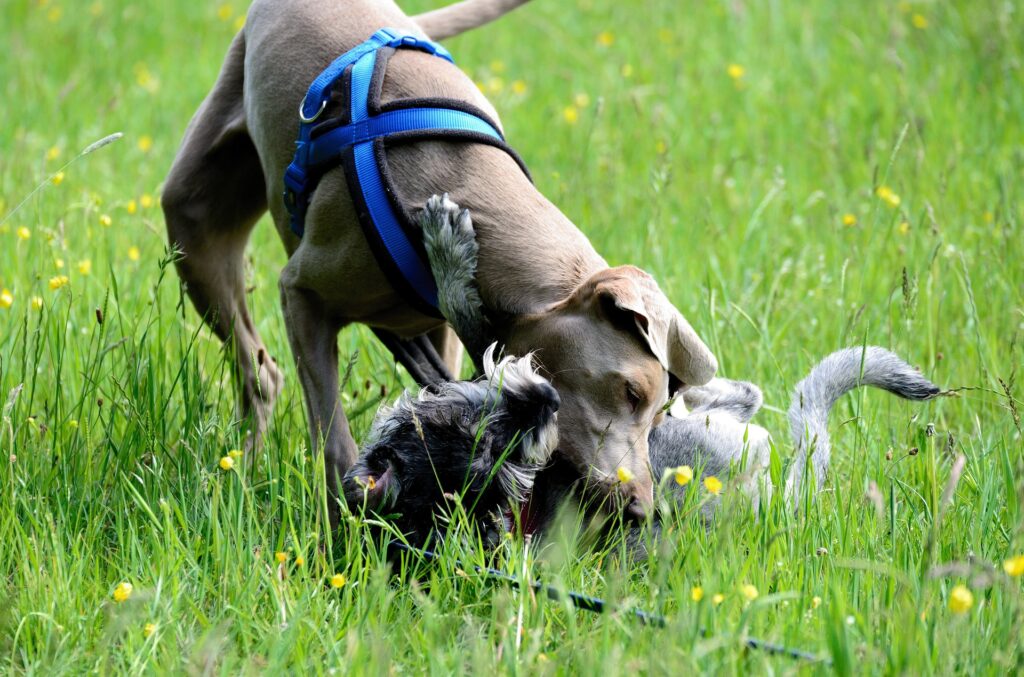
“It’s ok he’s friendly” BUT How do you know theirs’ is?
How many times have you heard this? No matter if your dog is very social, protect your dog and yourself from dog on dog attacks, by keeping them under control.
Under the Dangerous Dog Act, it’s illegal for a dog to be ‘out of control’ or to bite or attack someone. The legislation also makes it an offence if a person is worried or afraid (the term is ‘reasonable apprehension’) that a dog may bite them. So, it’s important to ensure that your dog is kept under control at all times and in all places. Whether you own a large dog or a miniature breed, and however calm and friendly your dog is, the Act still applies to you.
Why do dogs on dog attacks happen?
‘Attack’ isn’t quite the right word to use, as dogs don’t go around looking to attack others. Dogs are social animals and tend to steer clear of situations that might get aggressive. Dogs on dog attacks happen when one dog feels they don’t have another choice. This could be because they got a sudden fright, or because signs showing they are uncomfortable are ignored.
Try not to panic. If you panic, you make your dog (and the biting dog) worse.
Don’t try to separate them yourself. It might be hard, but if you try to pull your dog out of harm’s way you could end up with some nasty injuries, too. You could also injure your dog further if the other dog hasn’t let go.
Try to distract the other dog from a distance. See if you can distract it with a loud noise like a clap or squirting water. Don’t shout at or make eye contact with the dog as this can make them feel more threatened and make things worse.
Call your dog away.
Report the incident. If your dog has been injured, you can report it to the police by calling 101 and report it to your local council’s dog warden.
Collect details. Get the owner’s contact details and a photo of the other dog (if you can) and photograph any injuries your dog has. Make note of time, location and description of owner and dog.
Take your dog to the vet. Even if your dog’s injuries don’t look serious, take them to the vet straight away to get checked over.
What is a Community Protection Notice?
These can be served by the Council or the Police (and in due course by some social housing landlords) and the grounds are that there is conduct: –
(a) which is having a detrimental effect on the quality of life for those in the locality, and
(b) which is persistent or continuing, and
(c) which is unreasonable
The first step for an enforcer is to serve a written warning. If that doesn’t stop the nuisance then a CPN can be served specifying measures, which may include inter alia leashing, muzzling or training. If there is a breach the maximum Fixed Penalty Notice is £100 and if prosecuted the maximum fine is £2,500 for an individual (and the Court may order the forfeiture of the dog).
It may include incidents in both public and private places and could be used for:
- Dog on dog aggression
- Persistent straying
- Jumping up at the letterbox
- Accumulation of faeces in the garden
- Dog escaping into neighbouring garden / property
How do you know when a dog on dog “attack” might occur?
It is important to learn signs your dog feels uncomfortable as they try to ‘talk’ to us way before they start to growl. Never punish a dog for growling as they are just communicating that they feel uncomfortable. Usually, many signs will have been ignored before this and a growl is often a last resort before a bite. If a dog learns not to growl and early signs of anxiousness or stress aren’t being recognised, it may appear that the dog will bite ‘out of the blue’ or without warning.
- Licking their lips
- Ears going backwards, flattened on their head
- Yawning
- Showing the whites of their eyes (“whale eye” – look out for a white half-moon shape)
- Turning their face away
- Trying to move or turn away from the other dog
- Standing crouched or walking low to the ground.
Displacement cues may also be shown as a sign to defuse the situation
- Head / body shakes (as if they are wet)
- Sitting down Scratching ear, neck or back
- Randomly sniffing the ground
Be aware of your dog and their body language. When you notice these signs, give your dog some space. Sometimes dogs just need a break from the company of other dogs or people. Don’t force them to deal with other dogs or people if they are showing signs that they are stressed as this can make them even more uncomfortable.
Training and Behaviour Support
Selina has an extensive background in working with Reactive Dogs. If your dog has been attacked or done the attacking then why not read about the specific Moody Mutts Package